Non classé

Matt: Ari & X

I’m in NYC for the Stephan Wolfram dev/ai/nyc conversation tomorrow at the Automattic Noho space. While walking back from the Apple Store in Soho where I had picked up a new Studio Display XDR to try out, ran into one of my favorite YouTube accounts to follow right now, Ari at Home! I ran into him around 32 minutes into this Twitch stream. Here’s how he set up his rig. Ran into @ARIatTWIT walking back from @Apple store with new Studio XDR. ? Offered to get him set up on @WordPress or @Tumblr. Carrying the display was my workout for the day. pic.twitter.com/q3vgAG7Hxm — Matt Mullenweg (@photomatt) March 25, 2026 A video I’ve shared with friends recently is when Harry Mack ran into Ari, which was fun for me because they’re two of my favorite accounts to follow. Sorry I didn’t freestyle! I had to get back to do some work, which is why I got the monitor. In other cool X/Twitter news, they launched an awesome feature today that lets you restrict replies not just to people you follow, but to people they follow as well. Nikita gave a hat tip to the conversation I had with Peter Levels / @levelsio. Credit to @rsrbk123 @striedinger @x_belous @singhai for their work on this. And thanks @photomatt for the suggestion https://t.co/Gr2iD1O73Y — Nikita Bier (@nikitabier) March 25, 2026

Matt: Ari & X Lire la suite »

WordPress.org blog: WP Packages is Working the Way Open Source Should

When WP Engine acquired WPackagist on March 12, the WordPress developer community faced a familiar question: what happens when critical open source infrastructure ends up under corporate control? The community already had an answer in progress. Four days later, WP Packages (formerly WP Composer) launched as a fully independent, community-funded alternative, with some neat additional features. Built by Ben Words from Roots, the team behind Bedrock, Sage, and Trellis, WP Packages is a new open source Composer repository for WordPress plugins and themes. Composer is PHP’s dependency manager, and it is how many professional WordPress developers install and update plugins and themes in their projects. Every free plugin and theme in the WordPress.org directory is available through WP Packages. Migrating from WPackagist can be done via a single script or a few terminal commands. What Happened and Why It Matters WPackagist was created in 2013 by Outlandish, a UK-based digital cooperative, and it served the WordPress Composer ecosystem for over a decade. In its later years the project suffered from deferred maintenance, slow update cycles, and little to no community input. When WP Engine announced the acquisition, developers raised immediate concerns about a private-equity-backed corporation controlling infrastructure this foundational to the WordPress developer workflow. WP Engine immediately updated the Composer info field to display a “WPackagist is now maintained by WP Engine” notice in every developer’s terminal. A small thing, but telling. That’s how corporate ownership changes the relationship between a tool and its users. And it only took less than 24h for this to pop up on every composer run:« Info from https://t.co/1EEb4PZ9N2: WPackagist is now maintained by WP Engine. Learn more at https://t.co/89b2hBWxd9« Which I’m sure is a permanent message that will just shift to marketing. Prove me wrong https://t.co/HdcuQPkUqV — Jonathan de Jong (@jonathan_dejong) March 13, 2026 Ben had already started building a WPackagist replacement last August, long before the acquisition made headlines. When WP Engine’s deal landed, he accelerated the launch, going live on March 16 with a fully open source repository on GitHub. Open source repo ≠ transparent system. WP Packages makes everything public, including infrastructure and build process. – Ben Word on X It’s also just a better tool. WP Packages supports Composer v2’s metadata-url protocol, which lets Composer fetch metadata only for the packages a project actually needs. WPackagist still relies on the older provider-includes approach, forcing Composer to download large index files before resolving dependencies. Cold dependency resolves on WP Packages are roughly 17x faster: 0.7 seconds for 10 plugins compared to 12.3 seconds on WPackagist. WP Packages also uses CDN caching with public cache headers and serves immutable, content-addressed per-package files. Package naming is cleaner (wp-plugin/ and wp-theme/ instead of wpackagist-plugin/ and wpackagist-theme/), metadata includes plugin and theme authors, descriptions, and homepage URLs that WPackagist has been missing for years, and updates sync every five minutes rather than WPackagist’s roughly 90-minute cycle. How to Switch Switching from WPackagist to WP Packages requires just a few terminal commands. Remove your existing WPackagist packages: composer remove wpackagist-theme/twentytwentyfive Remove the WPackagist repository and add WP Packages: composer config –unset repositories.wpackagist && composer config repositories.wp-composer composer https://repo.wp-packages.org Require packages with the new naming: composer require wp-theme/twentytwentyfive Alternatively, use the migration script to automatically update your composer.json: curl -sO https://raw.githubusercontent.com/roots/wp-packages/main/scripts/migrate-from-wpackagist.sh && bash migrate-from-wpackagist.sh Roots also provides a WP Packages Changelog Action for GitHub workflows that tracks dependency updates using the new naming format. Projects using Bedrock already ship with WP Packages configured out of the box. Open Source Wins The entire WP Packages project is public. The application code, documentation, and even the full Ansible deployment configuration are available on GitHub. Anyone can fork the repository and run their own WordPress Composer registry. Ben has also committed publicly that WP Packages will never use the Composer info field to push messages, ads, or upsells into developer terminals. That kind of restraint is easier to promise when a project answers to its community rather than to a corporate parent. WP Packages is funded through GitHub Sponsors. Current sponsors include Carrot, Kinsta, WordPress.com, and Itineris. The WordPress ecosystem has always been at its strongest when the community builds the tools it needs in the open. Ben saw a gap forming months before anyone else was paying attention, built something better than what existed, and released it for everyone. No acquisition required. No boardroom decisions about availability or pricing. Just developers solving a problem for other developers and sharing the result. Open source wins.

WordPress.org blog: WP Packages is Working the Way Open Source Should Lire la suite »

WPTavern: #210 – Zach Stepek on the Interconnected WordPress Ecosystem, Partnerships and Trust

Transcript [00:00:19] Nathan Wrigley: Welcome to the Jukebox Podcast from WP Tavern. My name is Nathan Wrigley. Jukebox is a podcast which is dedicated to all things WordPress, the people, the events, the plugins, the blocks, the themes, and in this case, the interconnected WordPress ecosystem and how to build partnerships and trust. If you’d like to subscribe to the podcast, you can do that by searching for WP Tavern in your podcast player of choice, or by going to wptavern.com/feed/podcast, and you can copy that URL into most podcast players. If you have a topic that you’d like us to feature on the podcast, I’m keen to hear from you and hopefully get you or your idea featured on the show. Head to wptavern.com/contact/jukebox, and use the form there. So on the podcast today, we have Zach Stepek. Zach is what you might call a unicorn in the tech world, having held roles in design development, and much more. His experience spans everything from Cold Fusion and Flash, to JavaScript, WordPress, and WooCommerce. He’s worked with brands like IBM and MTV, in varied industries from medical records to e-commerce, and has spoken at WordCamps, WooConf, and contributed to the WordPress community through both agencies and product companies. You might know about WordPress, agencies, product companies and hosting, but might not have thought about how partnerships actually work in this ecosystem, or why they matter right now. Zach is here to explain just that. He starts off by sharing his journey into WordPress, his early challenges, and how an unexpected viral moment led him deeper into the ecosystem. He describes the three interconnected pillars of WordPress success, agencies or individuals, product companies, think plugins and themes, and hosting or infrastructure, and how each depends on the other to thrive. We discuss the current state of partnerships, how companies collaborate, why trust and values driven approaches are essential, and why the rapid rise of ROI driven, transactional thinking, is at odds with WordPress’ open source routes. Zach explores the perils of short-term wins, and the value of nurturing long-term, mutually beneficial, relationships especially as economic uncertainty and the changes in the broader world are beginning to reshape how companies interact. Then we talk about the challenges faced by hosting companies, the role of product companies in innovation, and how agencies often bridge these worlds. Zach makes the case for cultivating relationship equity, not just revenue, and how a rising tide can lift all boats, if the community keeps its collective focus. Towards the end, we discuss how the landscape has changed. Why community contributions matter more than ever, and what the future might hold as WordPress partnerships reach an inflexion point. If you’re curious about how these invisible partnership threads bind the WordPress ecosystem together, and how true partnership drives success, this episode is for you. If you’re interested in finding out more, you can find all of the links in the show notes by heading to wptavern.com/podcast, where you’ll find all the other episodes as well. And so without further delay, I bring you Zach Stepek. I am joined on the podcast by Zach Stepek. Hello Zach. [00:04:00] Zach Stepek: Hey Nathan, how you? [00:04:01] Nathan Wrigley: Zach and I have been talking for a fairly lengthy period of time, probably close to an hour or something like that. And we’ve strayed into a variety of subjects, none of which have been related to this podcast, but it’s been very enjoyable. He’s a thoroughly sociable and humorous chap, let’s put it that way. So I’ve appreciated the last hour. It’s been an absolute bonus. You’ve cheered me up no end. However, the listeners to this podcast, they may not know about you. They may not know what you do, or what you have done or whatever it may be related to WordPress. It’s a banal question, but I always like to introduce the podcast with it. Will you just tell us about yourself? [00:04:36] Zach Stepek: Yeah, so I am what you would hear referred to in the industry as a unicorn. I’ve been in multiple roles, from design to development. I started my career as a Cold Fusion developer, moved into Flash back in the day. Taught the Flex Framework everywhere from IBM to MTV. Spent time doing the teaching thing for about five or six years as an Adobe Certified Instructor. And then the bottom fell out of that industry, because of a letter that was written about Flash that you may remember. All of my contracts disappeared overnight. Within a week almost a million dollars worth of potential revenue had been cancelled. Back then I was very nice with my out clauses in my contracts, and I learned a very harsh lesson. Spent a year working support at a company that may have had something to do with the collapse of my industry, working for their care division and learned about the support industry there while learning new things. And one of those new things was WordPress. I worked as an Experience Designer at a medical, an electronic medical records company, working on the design of their EMR software for a while. And then worked at a company called Comply365, where I dove deep into JavaScript and did a lot of demos of their forms platform, which is used by airlines all over the world to do the submission of service forms for aeroplanes. The company actually started as a way to get rid of the giant binders that pilots used to carry that had the manuals. The company started as a digitiser of that material into a tablet application that pilots could carry in the pocket of a briefcase rather than it being a briefcase itself. So worked there. Throughout the years I was working on WordPress. I had been involved in bringing a record label back to Rockford that had folded. Rockford, Illinois is where I live. And we built a WooCommerce site to

WPTavern: #210 – Zach Stepek on the Interconnected WordPress Ecosystem, Partnerships and Trust Lire la suite »

HeroPress: An Eighth Grader’s Dream Comes True

Here is Ray reading his own essay aloud. When I was in eighth grade, I wanted to be a commercial artist. It wasn’t common thinking at the time (and for some it still isn’t) for art or design to be considered a practical career path. The thinking was, within art there was fine art for the people who could really paint or draw, and commercial art for people whose skills were passable; neither of which would lead to a comfortable lifestyle. I was just OK and never would be a fine painter, I was good enough at design for screen-printing and designing the posters and programs for the Jr. High fashion show or laying out the school newspaper. I liked it a lot, though I eventually pursued other career aspirations. I start the story this way because later in life, WordPress gave me the opportunity to have the career I wanted when I was 14. Today I run Made for You Media, a well-respected digital marketing agency specializing in WordPress for local businesses, but the path here took many turns and had many ups and downs. How I Got Here After attending college, the path I found myself on led me far from the world of art. I spent time working in a chemistry lab, in retail, then eventually to financial services. I spent almost twenty years working for the “Don’t leave home without it” credit card company, serving international markets in Asia and Latin America. During a stint in Canada, my wife grew tired of being away from family. With news that we would soon have a grandchild on the way, we started the process to move back home. I knew that I wanted my own business. I planned to start a company to coach small business owners on how to build productive, high-functioning teams. Even though the dot.com bubble was long gone, I knew that even for a small, local company, I would need a good website. While closing out my days working in Canada, I would get home from the office around 7:30 in the evening, get something to eat, then from 9PM to about 1 or 2 in the morning, work on building, or trying to learn how to build, a business website. I repeated this routine for weeks until I had something professional looking. I hand-coded this first website in 2009 and it received lots of complements. However, as good as it looked on the outside, it seemed that things were always breaking under the hood. I had heard about “this WordPress thing” and started looking into it. I recreated my HTML site using the “theme that cannot be mentioned–but had great typography” and haven’t looked back. Pivoting To WordPress Ultimately, the coaching business I built that initial website for failed, but what I learned in building my first WordPress site enabled me to start building websites for other people. During the autumn of 2010, I built my first site for a paying client. It took me forever, but I got it launched. After building a few sites I needed to learn more than what I could on my own at the University of Google. I started attending WordCamps. WordCamp Raleigh was the first WordCamp I attended, and it was a great experience. In WordPress, we often talk about “the WordPress community” and that’s what it was. The same people whose blog posts I read were there in person. Experts, people who in my mind were the stars of the WordPress galaxy, were there, talking, teaching, and sharing with regular people like me. We ate barbecue, joked, and laughed together just like at a family or school reunion. The sense of community and belonging was strong, and something I still cherish. I got hooked on WordPress through Chris Jean‘s exuberant enthusiasm in talking about “the loop” and his new plugin. I bought the plugin even though at the time I didn’t understand what the loop was, I just knew from his excitement it had to be good. At another WordCamp Amy Hendrix talked about how important it was to contribute back to WordPress, and she sunk the hook deeper. Over time, I went from attending WordCamp, to folding up chairs at the end of the day, to filming other people’s presentations, to delivering my own. I’ve since had the opportunity to speak at several WordCamps including a couple of times at WCUS. What We’ve Become Over the years my company has built many websites using WordPress, mainly supporting local businesses in the US, but also internationally. We’ve been able to serve many non-profit organizations, allowing them to effectively and affordably serve their communities, leveraging the WordPress platform to attract volunteers and donations. I even had the opportunity to write my first book, Magical Websites for Coaches, an instructional text that showcases the power of WordPress. I point this out because WordPress and the WordPress community enable someone who’s motivated to leverage their experience to start what can become a very profitable business at a very low cost. With the business lessons I’d learned over the years, a domain name and an affordable shared hosting plan (thanks Dreamhost) and a few business cards, I was able to launch my business. In the process, I’ve had the opportunity to make great friends and build lasting relationships, meet, and learn from some very smart and inspiring people, and after many years, have a successful career “doing commercial art” full-time at my own company. The post An Eighth Grader’s Dream Comes True appeared first on HeroPress.

HeroPress: An Eighth Grader’s Dream Comes True Lire la suite »

WordPress.org blog: WordPress 7.0 Release Candidate 1

The first Release Candidate (“RC1”) for WordPress 7.0 is ready for download and testing! This version of the WordPress software is still under development. Please do not install, run, or test this version of WordPress on production or mission-critical websites. Instead, it’s recommended to evaluate RC1 on a test server and site. WordPress 7.0 RC1 can be tested using any of the following methods: Plugin Install and activate the WordPress Beta Tester plugin on a WordPress install. (Select the “Bleeding edge” channel and “Beta/RC Only” stream.) Direct Download Download the RC1 version (zip) and install it on a WordPress website. Command Line Use this WP-CLI command: wp core update –version=7.0-RC1 WordPress Playground Use the WordPress Playground instance to test the software directly in your browser. No setup required – just click and go! The scheduled final release date for WordPress 7.0 is April 9, 2026. The full release schedule can be found here. Your help testing Beta and RC versions is vital to making this release as stable and powerful as possible. Thank you to everyone who helps with testing! Please continue checking the Make WordPress Core blog for 7.0-related posts in the coming weeks for more information. What’s in WordPress 7.0 RC1? What’s new in WordPress 7.0? Check out the Beta 1 announcement and WordPress 7.0 Developer Notes for details and highlights. RC1 contains more than 134 updates and fixes since the Beta 5 release. You can browse the technical details for all issues addressed since Beta 5 using these links: GitHub commits since March 12, 2026 Closed Trac tickets since March 12, 2026 New Features since Beta 1 The release squad in conjunction with project leadership identified additional features that were not ready for beta 1 but are included in RC1 as supporting requirements for flagship features of the release. AI Connectors Screen – A new admin screen for connecting AI providers to your site and an API for registering additional ones. The Command Palette is now available via a ⌘K or Ctrl+K shortcut in the admin bar. Want to look deeper into the details and technical notes for this release? These tickets and pull requests are just some of the latest updates: #GB-76700: Client Side Media as plugin only #GB-76722: Add support for non-AI providers on Connector’s Screen #GB-76736: New activation hook to enable RTC by default #64904: WP_ALLOW_COLLABORATION constant for RTC #GB-76704: Increased polling intervals for RTC #GB-76643: Real Time Collaboration is opt-in by default #GB-76460: Toggle to turn RTC session notifications on/off #62046: Update PHP AI Client package to 1.3.1 #GB-76550: Revisions: Show changed block attributes in sidebar #62067: Single config option to disable all LLM related features #63697: OPCache added to Site Health > Info > Server The final release is on track for April 9, 2026. As always, a successful release depends on your confirmation during testing. So please download and test! How you can contribute WordPress is open source software made possible by a passionate community of people collaborating on and contributing to its development. The resources below outline various ways you can help the world’s most popular open source web platform, regardless of your technical expertise. Help test this release Testing for issues is crucial to the development of any software. It’s also a meaningful way for anyone to contribute. Your help testing the WordPress 7.0 RC1 version is key to ensuring that the final release is the best it can be. While testing the upgrade process is essential, trying out new features is equally important. This detailed guide will walk you through testing features in WordPress 7.0. What to test: Real Time Collaboration Pattern Editing and content-only Interactivity If you encounter an issue, please report it to the Alpha/Beta area of the support forums or directly to Trac if you are comfortable writing a reproducible bug report. You can also check your issue against a list of known bugs. Test on your hosting platforms Hosting systems provide vital infrastructure for supporting WordPress and its users. Testing on hosting infrastructure ensures that WordPress and hosting systems are fully compatible, free of errors, optimized for the best possible user experience, and that updates roll out to customer sites without issue. Thank you to all web hosts who test WordPress! Want to set up testing on your hosting system? Get started with configuring distributed hosting tests here. Update your theme or plugin For plugin and theme authors, your products play an integral role in extending the functionality and value of WordPress for all users. Thanks for continuing to test your themes and plugins with the WordPress 7.0 beta releases. With RC1, you’ll want to conclude your testing and update the “Tested up to” version in your plugin’s readme file to 7.0. If you find compatibility issues, please post detailed information to the support forum. Curious about testing releases in general? Follow along with the testing initiatives and join the #core-test channel on Making WordPress Slack. Help translate WordPress Do you speak a language other than English? ¿Español? Français? Русский? 日本語? हिन्दी? বাংলা? मराठी? ಕನ್ನಡ?  You can help translate WordPress into more than 100 languages. This release milestone (RC1) marks the hard string freeze point of the 7.0 release cycle. However, strings will not be available for translation until RC2 later this week. An RC1 haiku RC1 arrives with momentum, sped up time and jazz on the mind. Props to @4thhubbard, @desrosj, @jeffpaul, @chaion07, @audrasjb, @jorbin for collaboration and review.

WordPress.org blog: WordPress 7.0 Release Candidate 1 Lire la suite »

Matt: WP.com MCP

If you host your WordPress on WordPress.com your AI agent can now manage your entire site, including updating posts or pages, making drafts, pretty much all the things you normally do with WordPress. Hook this up to your OpenClaw, Hermes, ChatGPT, Claude, Grok, whatever and have fun!

Matt: WP.com MCP Lire la suite »

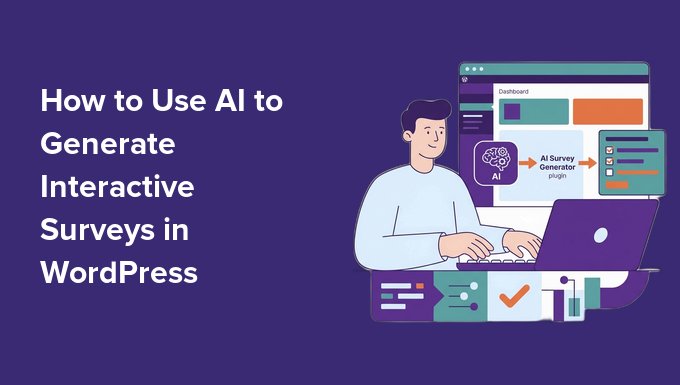
Forget Boring Forms: How to Build Interactive WordPress Surveys with AI

Building a survey in WordPress is easy, but designing one that gives you actionable data is a different story. Most surveys give useless results because they aren’t engaging enough to get honest, detailed answers from visitors. I’ve found that the best way to fix this is by creating interactive surveys that adapt to your users in real-time. And by using AI to build your forms, you can skip the frustrating manual setup and focus on asking the right questions In my experience, using interactive elements like conditional logic and conversational layouts can boost your completion rates. This makes sure you collect the hard data you need to grow your business instead of just polite feedback. In this article, I will show you how to use WPForms and its AI features to create interactive surveys in WordPress. I’ll show you exactly how to set this up so you can start getting better insights from your audience today. Quick Summary: Create smarter surveys using WPForms AI to generate questions and conditional logic to personalize the user experience. This guide shows you how to set up conversational layouts and visual reporting to boost engagement and collect actionable insights. Here are the topics I will cover in this article: Why Create Interactive Surveys in WordPress? What You Need to Get Started (Free vs. Pro) Using AI to Build an Interactive Survey Prompt Adding Smart Logic for a Personalized Experience Publishing Your Interactive Survey Option 1: Share Your Conversational Survey Link (Recommended) Option 2: Embed the Survey on an Existing Page Analyzing Your Data with Interactive Reports Bonus: How to Reduce Form Abandonment Frequently Asked Questions About WordPress Surveys Additional Resources for Improving Your Surveys Why Create Interactive Surveys in WordPress? Creating interactive surveys in WordPress is one of the best ways to get honest feedback from your visitors. Static forms can often feel long and boring, which causes many people to leave before they finish. Interactive surveys solve this problem by adapting to your users in real-time. This personal touch significantly improves your completion rates: Better Engagement: Users are more likely to finish a form that feels personalized and conversational. Higher Quality Data: You can use specialized fields like Likert Scales to get more accurate ratings than a simple ‘Yes’ or ‘No’. Shorter Forms: By using conditional logic, you only show questions that are relevant to each specific user. Professional Insights: Features like NPS allow you to track customer loyalty using the same standards as big brands. Plus, interactive surveys help you make better decisions for your website. Instead of guessing what your audience wants, you have hard data to guide your next steps. Best of all, using AI to generate these forms reduces your setup time from hours to roughly 15 minutes. It allows you to focus on the goal of your data rather than the mechanics of the builder. What You Need to Get Started (Free vs. Pro) WPForms is the best drag-and-drop form builder for WordPress. It helps you create interactive surveys using AI, conditional logic, and conversational layouts to increase completion rates and gather actionable data. You can start building your first WordPress survey using the free version of WPForms. However, if you want to create truly interactive surveys with visual data reports, you will need WPForms Pro. While the free plugin allows you to use the AI form builder, the specialized survey fields, reporting tools, and the ‘Conversational Forms‘ addon are all premium features that require WPForms Pro. This addon makes your surveys feel more like a one-on-one chat. To get started, you will first need to install and activate the WPForms plugin. If you need help, you can see our guide on how to install a WordPress plugin. Once the plugin is active, you must verify your license. You can do this by going to WPForms » Settings and entering your license key to unlock the Pro features. Next, you’ll need to install the survey tools. You can do this manually by navigating to WPForms » Addons to find and install the ‘Surveys and Polls’ addon. While you are there, I also highly recommend finding the ‘Conversational Forms‘ addon and clicking ‘Install Addon’. This is the specific tool that will allow you to turn your standard survey into a full-screen, interactive layout. Once these steps are complete, your website is ready to handle smart, interactive surveys. You can now start building your first form using AI. Expert Tip: When you start collecting survey data from users, you should update your Privacy Policy page. It is important to let your visitors know exactly how you use their information to stay compliant with privacy laws like GDPR. Using AI to Build an Interactive Survey Prompt Now that you have the right tools installed, you are ready to start building your first survey. To begin, navigate to WPForms » Add New Form in your WordPress dashboard. You will see the form builder screen with several template options. Instead of choosing a pre-made template, click the ‘Generate With AI’ button to open the AI assistant. This is where you can use a creative prompt to describe exactly what you want. I’ve found that asking the AI to include specific interactive fields, like a Likert Scale or an NPS field, gives you a much more professional result. For this example, you can enter a prompt like: Create a conversational customer survey for a coffee shop. Include a Likert Scale for atmosphere, a Net Promoter Score field, and a Paragraph Text field asking ‘Please explain your low rating’. The AI will then process your request and build a draft of the form for you. It will automatically select the best field types and even set up the standard 0-10 rating for your loyalty questions. After the AI finishes, you will see a preview of your new survey. If you want to make changes, you can use the chat prompt to ask the AI to adjust it. For example, you can ask it to

Forget Boring Forms: How to Build Interactive WordPress Surveys with AI Lire la suite »