
Non classé

WordCamp Central: WordCamp Port Harcourt 2026: A Community-Led WordPress Event in Nigeria

WordCamp Port Harcourt 2026 is set to bring together WordPress users, designers, developers, content creators, entrepreneurs, and digital enthusiasts from across Nigeria and beyond for a day of learning, collaboration, and community building. The event will take place on 21 February 2026 at the Celebr8 Center, 35 Olu Obasanjo Road, Port Harcourt, and is fully volunteer-led, in line with the global WordCamp tradition. Growing the WordPress Community in the Niger Delta Port Harcourt has a fast-growing tech and creative ecosystem, and WordCamp Port Harcourt continues to play a key role in nurturing local talent, encouraging open-source contribution, and creating access to digital skills. Since its inception, the WordCamp Port Harcourt community has focused on: Supporting beginners taking their first steps with WordPress Helping freelancers and agencies improve their workflows and businesses Introducing students and young professionals to open-source culture Connecting local creators to the global WordPress ecosystem WordCamp Port Harcourt 2026 builds on this foundation by creating a space where people can learn, share experiences, and form meaningful connections. What to Expect at WordCamp Port Harcourt 2026 Attendees can look forward to a full day of practical and engaging sessions covering topics such as: WordPress for business and entrepreneurship Design, performance, and user experience Content creation and digital publishing Security, hosting, and website management The future of work, skills development, and WordPress The event will feature talks from a variety of speakers, panel discussions, speed build challenge, and opportunities to interact with sponsors and community partners. As with all WordCamps, sessions are designed to be accessible to a wide range of experience levels—from complete beginners to seasoned professionals. Community, Not Just a Conference Beyond talks and presentations, WordCamp Port Harcourt 2026 emphasizes the importance of community. Attendees will have opportunities to: Network with fellow WordPress users and professionals Meet contributors and community organizers Learn how to get involved with WordPress meetups and future events Share ideas and experiences in a welcoming, inclusive environment Meals, drinks, and community freebies are included with tickets, helping to create a relaxed and engaging atmosphere throughout the day. Organized by Volunteers WordCamp Port Harcourt 2026 is organized by a dedicated team of local volunteers who contribute their time and skills to make the event possible. The organizing team works closely with the global WordCamp community to ensure the event aligns with WordCamp guidelines and open-source values. Support from sponsors helps keep ticket prices affordable and ensures the event remains accessible to students, freelancers, and small business owners. Get Involved Whether you’re a WordPress user, a business owner, a student, or someone curious about open-source technology, WordCamp Port Harcourt 2026 offers something for you. To learn more, purchase tickets, or find out how to get involved as a volunteer or sponsor, visit:https://portharcourt.wordcamp.org/2026/ WordCamp Port Harcourt 2026 looks forward to welcoming the WordPress community to the Garden City for a day of learning, sharing, and celebrating the power of open source.
WordCamp Central: WordCamp Port Harcourt 2026: A Community-Led WordPress Event in Nigeria Lire la suite »

6 Automation Tricks to Reduce Churn on Your Membership Site

On our video training site, WP101, our focus is on helping members feel confident with WordPress and grow their websites over time. But we learned that churn (members cancelling their subscriptions) is a common challenge, even when the content is genuinely valuable. In many cases, members don’t cancel because they’re unhappy with the content. They cancel because they get busy, forget to log in, or lose momentum. That’s where automation made a real difference for us. By adding a few simple workflows, we were able to stay connected with members at the right moments, reduce cancellations, and keep people engaged without extra manual work. In this guide, I’ll share the exact automation strategies we use to improve member retention. They’re easy to set up and can have a meaningful impact on your membership revenue. TL;DR: Reducing churn on a membership site comes down to staying connected at the right moments. This includes using automation to: Welcome new members. Drip content to prevent overwhelm. Re-engage inactive users. Recover failed payments. Celebrate member milestones. Offer smart alternatives when someone tries to cancel. Why You Need Smart Solutions for Member Retention Churn can really hurt the subscription revenue on your membership website. When members cancel, you are forced to constantly hunt for new signups just to maintain your current income. To fix this, you must understand the two types of churn: Voluntary churn happens when members choose to leave because they lose interest. Involuntary churn occurs when payments fail due to expired cards or bank errors. Here is a quick breakdown of common membership terms you should know: Term Definition Churn The percentage of members who cancel during a specific period. Voluntary Churn When members actively choose to cancel their accounts. Involuntary Churn When memberships end due to payment failures or expired cards. Retention Rate The percentage of members who stay subscribed over time. Dunning Automatically retrying failed payments and sending reminders. Drip Content Releasing content on a schedule to keep members engaged. Manual retention strategies might work when you are just starting out, but they become impossible to manage as your site grows. Eventually, there aren’t enough hours in the day to personally email every single member who forgets to update their credit card. That is where automation becomes essential. It handles these tasks 24/7, ensuring no member slips through the cracks while you focus on creating great content. Here’s a quick overview of the automation strategies I will cover in this article. You can use the links below to jump to different methods: Automate Your Community Welcome Committee Keep Members Coming Back With Drip-Fed Content Re-engage At-Risk Members Simplify Payment Issues with Automatic Reminders Celebrate Loyalty With an Anniversary Gift Save Departing Members by Understanding Their Needs Frequently Asked Questions About Membership Churn Additional Resources for Membership Websites 1. Automate Your Community Welcome Committee In my experience, the most important moment in a member’s lifecycle is the first five minutes after they pay. If they have to hunt for your community page or request access manually, the excitement fades. I have found that the best solution is to create an automated Welcome Committee. Instead of just sending a cold transaction receipt, I use Uncanny Automator to instantly introduce the new member to the community. For example, as soon as a payment goes through, the system can automatically post a shoutout in your member forum, Facebook group, or Slack channel saying: Please welcome [Name] to the tribe! This immediate public recognition makes the new member feel seen and valued before they even log in. To do this, you will need the Pro version. You can get an overview of how to use the plugin in our guide on how to create automated workflows in WordPress with Uncanny Automator. You will also need an active community platform. For this tutorial, I will be using BuddyBoss, but the process is similar for other platforms. If you haven’t built one yet, you can follow our full guide on how to create a private community with WordPress. Once your tools are active, go to Automator » Add New and create a Logged-in recipe. Step 1: The Trigger Select the ‘MemberPress’ integration and choose the trigger: ‘A user is added to a membership’. Then, select the specific membership level (for example, ‘Gold Plan’). Step 2: The Actions We want to make the user feel famous instantly. Select the ‘BuddyBoss’ integration (or whichever online community platform you are using) and add these two actions: Action 1: ‘Add the user to a group’. Select your ‘Welcome’ or ‘Introductions’ group. Action 2: ‘Post to the user’s activity stream’. You can automate a message like: “I just joined the Gold Community! Say hello! 👋” Now, the moment a user buys, they are instantly part of the tribe. Their profile is active, they are in the group, and they have a post that others can like and comment on. This builds immediate ‘social stickiness’. 2. Keep Members Coming Back With Drip-Fed Content I have seen many membership sites fail because they overwhelm their users on day one. If you give a new member instant access to 500 videos, they often feel paralyzed and eventually cancel because they ‘don’t have time.’ The solution we use at our own video membership site is drip content. By releasing material on a schedule, you give members a compelling reason to stay subscribed month after month. MemberPress makes this incredibly easy by automatically handling the timeline for each user. To set this up, go to MemberPress » Rules and click ‘Add New’. Under ‘Protected Content’, select the content (like a specific category of posts or a single course page) you want to delay. Next, scroll down to the ‘Drip / Expiration’ section and check the ‘Enable’ box. Here, you can set the rule to trigger after a specific time. For example, you can set it to ‘7’ days after ‘Member Registers’. My Favorite Trick: You can also use Fixed Date dripping. I use this to release

6 Automation Tricks to Reduce Churn on Your Membership Site Lire la suite »

Jonathan Desrosiers: Open Source Collaboration And A Proud Moment

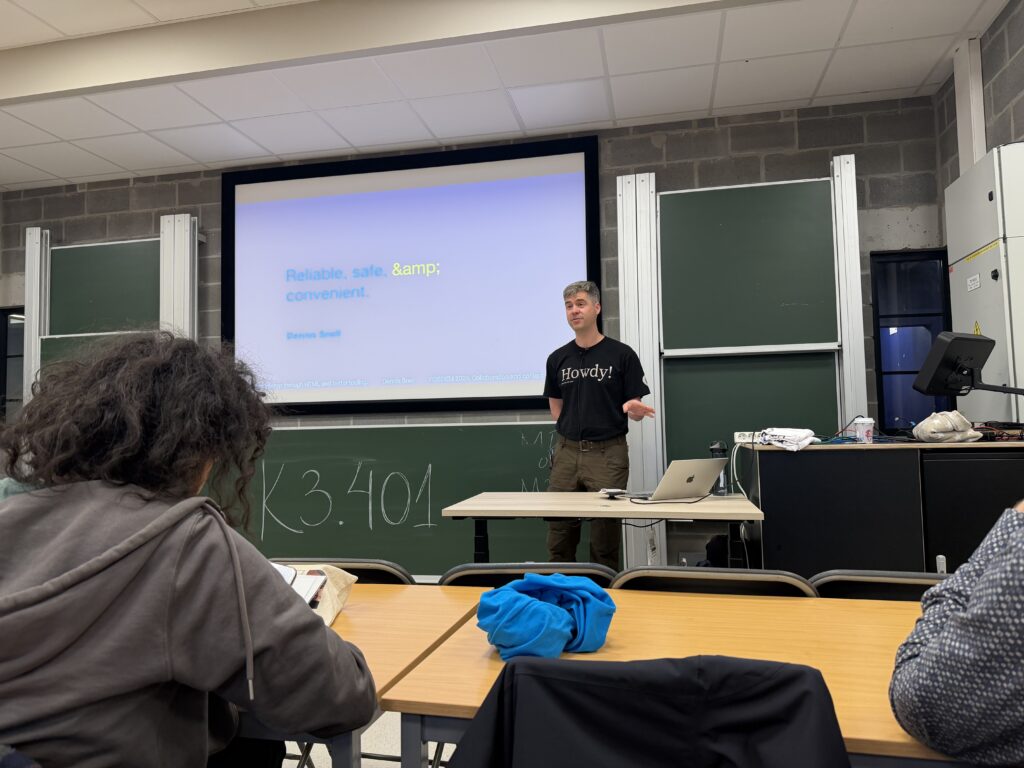
This past weekend at FOSDEM, I had a proud moment that had me reflecting on open source collaboration. We all experience moments like this throughout life. On occasion it’s a result of my own efforts, such as finally publishing something I’ve spent a considerable amount of effort on. But it’s more common that the feeling is triggered by something someone else does. Late on day 1 of the conference, fellow WordPress Core Committer Dennis Snell gave a talk in the Collaboration and Content Management track called Stronger interop through HTML and better tooling (recording can be found on the session page). The talk detailed how the HTML API within WordPress came about, the considerations that were made while building it, and how the end result has helped the broader web in addition to WordPress itself. Dennis did a fantastic job! While I’m also a Core Committer, I have only been casually involved with this feature at best. It’s impossible to keep track of everything being worked on within a project as large as WordPress. His talk filled in many of the gaps of my knowledge, and I learned a ton! Letting Go When you’re involved with a project in a sustained and meaningful way, it can be difficult to “let go” of the urge to weigh in on as many tickets, pull requests, and discussions as you can. While it’s often true that you could add something that’s valuable or mention a non-obvious detail, knowing when to engage is a craft that requires consistent refinement and reflection. When Dennis was presenting, I found myself thinking “I’m so glad he worked on this project.” He deeply researched prior art both internally and externally to WordPress, and he put a lot of care into thinking through what would be best for the users of the software. In the context of this challenge the users are primarily two groups: the developers interacting with the API and end users viewing sites with HTML manipulated by the API. Watching him present made me realize something important about collaborative work. In many ways I was relieved. It was a great reminder to “let go”. We need to have confidence in each other to take on challenging problems and share that work openly, creating space for emerging contributors to learn and grow. Impact On Others As a number of thoughtful questions were asked following his talk, I couldn’t help but feel proud. Yes, I was proud of Dennis. But I was also proud of everyone that contributed to this feature in some way (he was certainly not the only contributor who invested time and effort into researching and building), and of the software that we all invest so much time and effort into maintaining. There are so many incredibly smart and talented people who contribute to WordPress and open source. His talk not only reminded me to step back and trust others, but also of the impact we can have on our peers and colleagues by caring about our craft and sharing that generously in the open. Though we try our best, thoughtfulness can be really hard to detect through written communication. In-person presentations and discussions will always be the best way to share passion, enthusiasm, and care with other humans. As contributors, we are solving real problems with solutions that don’t only benefit users of WordPress. In the case of the HTML API, the contributors working on this feature submitted bug fixes back to the HTML specification to benefit every single person building on and using the Internet. The impact that open source work has is unpredictable and surprising. Being Project Ambassadors As a senior mentor within the WordPress community, I’m often asked what it means to be an ideal contributor to an Open Source project. While the qualities of a good open source contributor are long established, I’ve been meaning to publish a “reloaded” breakdown for some time. This recording has been added to my list of examples to include when I finally get around to it. To some degree, every member of the community is a representative of the project. But this is especially true for Core Committers. I couldn’t have asked Dennis to be a better ambassador for WordPress at the largest open source conference in the world. In an extraordinary way he represented the collective work of all our contributors and the way we advocate for our users above all else. So thank you, Dennis. And thank you to everyone who contributes to open source. Featured image credit: CC0 licensed photo by Jennifer Bourn from the WordPress Photo Directory. The post Open Source Collaboration And A Proud Moment appeared first on Jonathan Desrosiers.

Jonathan Desrosiers: Open Source Collaboration And A Proud Moment Lire la suite »

WordPress.org blog: Piloting the AI Leaders Micro-Credential

Today, we are happy to announce our first WordPress-focused micro-credential, designed to help students build practical AI skills, earn a recognized credential, and connect more directly to job opportunities. The program, AI Leaders, is a workforce-oriented credential rooted in WordPress and open source contributions. Students are paid for their time, work on real WordPress projects, and gain hands-on experience applying AI in ways that are directly relevant to the WordPress ecosystem. This pilot represents a meaningful step forward in how the project supports learning, contribution, and career pathways. Beginning in March 2026, AI Leaders launches its first cohort of 80 students from Illinois and Louisiana, with University of Illinois Chicago (UIC) students given priority to apply before enrollment expands to the public. Enrollees begin with an orientation covering generative AI tools and AI literacy. From there, 40 participants are selected for the full course experience. Ultimately, the program leads to the AI Leader WordPress Micro-Credential and an opportunity to pursue living-wage job pathways. Learners who complete the course also earn $1,000 (USD). This pilot is the result of collaboration across several organizations, each playing a distinct role. The program is funded through the UIC Tech Solutions Open Source Fund, with support from the University of Illinois Chicago and Automattic. That funding supports program delivery, participant compensation, and the institutional infrastructure needed to run the pilot. Alongside that funding, the WordPress project and the WordPress Foundation will contribute to the development of the credential itself. This includes shaping the curriculum, grounding the work in real WordPress AI use cases, and ensuring alignment with open source values and public benefit. Visit the AI Leaders site to learn more and apply. Start Your Application This is the first WordPress Foundation-backed micro-credential, and it is intentionally being run as a pilot. We are exploring how the Foundation could support additional credentials over time, across different skill areas and partners, while maintaining clear governance, openness, and alignment with the WordPress project. It represents a step toward a future where WordPress contributors can more easily translate their skills into credentials, careers, and long-term opportunities. WordPress offers a wide range of educational opportunities for people at every stage, from first steps to advanced contribution. Explore workshops, lesson plans, and community-created resources designed to help you build practical skills while connecting with others who are learning and contributing at WordPress.org/education/.

WordPress.org blog: Piloting the AI Leaders Micro-Credential Lire la suite »

#203 – Miriam Schwab on Elementor’s Decade of Growth and the Future With AI

Transcript [00:00:19] Nathan Wrigley: Welcome to the Jukebox Podcast from WP Tavern. My name is Nathan Wrigley. Jukebox is a podcast which is dedicated to all things WordPress. The people, the events, the plugins, the blocks, the themes, and in this case Elementor’s decade of growth and its future plans with AI. If you’d like to subscribe to the podcast, you can do that by searching for WP Tavern in your podcast player of choice, or by going to wptavern.com/feed/podcast, and you can copy that URL into most podcast players. If you have a topic that you’d like us to feature on the podcast, I’m keen to hear from you and hopefully get you, or your idea, featured on the show. Head to wptavern.com/contact/jukebox, and use the form there. So on the podcast today we have Miriam Schwab. Miriam has been deeply immersed in the WordPress ecosystem for around two decades. Starting out offering WordPress as a service, she went on to lead a custom WordPress agency serving major tech companies and nonprofits before founding the startup Strattic, pioneering static WordPress architecture. After Strattic’s acquisition by Elementor in 2022, Miriam took the role of Head of WordPress acting as the key liaison between Elementor and the wider WordPress community. Elementor growth over the last decade has been prolific. Miriam says that it now powers over 13% of the entire web. She gives insights into the challenges and responsibilities that come with maintaining such a large user base, especially around major updates and backwards compatibility. Much of our conversation centers around the rise of AI in WordPress, from built in AI tools for generating images and content to the standalone Angie plugin that introduces agentic AI capabilities across WordPress. Miriam outlines Elementor’s multi-pronged approach to innovation, talking about how their Site Planner tool uses conversational AI to guide beginners and professionals from an idea all the way to a wire framed website. And how the upcoming AI integrations promise even more granular design control. Miriam also shares her perspectives on how the new Abilities API is set to change what’s possible inside WordPress, and what this means for developers, designers, and support teams navigating the complexities of AI driven workflows. For those interested in how AI is shaping the future of WordPress, Elementor’s strategy, and the evolving role of creators within this ecosystem, this episode is for you. If you’d like to find out more, you can find all of the links in the show notes by heading to wptavern.com/podcast, where you’ll find all the other episodes as well. And so without further delay, I bring you Miriam Schwab. I am joined on the podcast by Miriam Schwab. Hello Miriam. [00:03:23] Miriam Schwab: Hi. [00:03:24] Nathan Wrigley: Nice to have you with us. Now, dear listener, I have to be very grateful to Miriam because about three weeks ago we tried to capture this exact podcast. In fact, we did. We captured this exact podcast. Unfortunately, the tech failed and Miriam’s audio was entirely silent. So we had a nice long conversation, Miriam divulged her experience and wisdom, and I got to put it out on the podcast and there was nothing there. It was completely blank. So firstly, an apology for that. And secondly, enormous thanks for coming back and talking to me. [00:03:54] Miriam Schwab: Well, I have to thank you for giving this another shot because I have a feeling that the technical difficulties were also on my side. So thank you for giving this another go. [00:04:03] Nathan Wrigley: Yeah, well, I appreciate it. So Miriam has a long and storied history in WordPress. She’s working with Elementor at the moment, but the story goes back way further than that. Let’s just do the little potted bio at the beginning, Miriam. Just tell us a, just a short version of who you are in the WordPress space, and what you’ve achieved in the past. [00:04:20] Miriam Schwab: Okay, so about 20 years ago, I discovered WordPress. Loved it, decided to work with it, started offering it as a service. Eventually that expanded into being an agency, and working on custom implementations of WordPress for tech companies and large nonprofits, which was a lot of fun and a great learning experience. Did that for about 13 years. Sold the agency and founded a startup based on one of the many ideas I had had over the years. I had many ideas for products over the years, but I knew that I needed to make sure I wasn’t over spending my abilities, like between family and work and everything. But I got to the stage where I was like, okay, I can do this. And I actually really loved the idea. So I founded a startup that was called Strattic. It published WordPress websites in a static architecture while retaining dynamic capabilities. And by doing that, it solved pretty much all the issues related to speed security and scalability. Raised venture capital funding for it, and it was acquired by Elementor in June, 2022. And after joining Elementor, continued to lead the Strattic team for about six months, and then they offered me this new position that hadn’t existed before. Initially, we called it the Head of WordPress Relations, and then it evolved to just being called Head of WordPress, where I act as a liaison between Elementor and the broader WordPress community on many levels. Practically, strategically, community, like you name it and I’m probably doing it. So that’s a bit about me. [00:05:43] Nathan Wrigley: Do you have like a job description? Because when you say sort of Head of WordPress, there really seems to be almost no bounds in terms of the WordPress and Elementor connection. Do you have constraints on what is out of bounds? Or is it literally anything that’s connected with WordPress comes under your purview? [00:05:57] Miriam Schwab: It is literally anything, pretty much. It suits me because I was the

#203 – Miriam Schwab on Elementor’s Decade of Growth and the Future With AI Lire la suite »

WordPress.org blog: WordPress 6.9.1 Maintenance Release

WordPress 6.9.1 is now available! This minor release includes fixes for 49 bugs throughout Core and the Block Editor, addressing issues affecting multiple areas of WordPress including the block editor, mail, and classic themes. For a full list of bug fixes, please refer to the release candidate announcement. WordPress 6.9.1 is a short-cycle maintenance release. The next major version of WordPress will be 7.0; it is scheduled for release on 9 April 2026 at WordCamp Asia. If you have sites that support automatic background updates, the update process will begin automatically. You can download WordPress 6.9.1 from WordPress.org, or visit your WordPress Dashboard, click “Updates”, and then click “Update Now”. For more information on this release, please visit the HelpHub site. Thank you to these WordPress contributors This release was led by Aaron Jorbin and Aki Hamano. WordPress 6.9.1 would not have been possible without the contributions of the following people. Their asynchronous coordination to deliver maintenance fixes into a stable release is a testament to the power and capability of the WordPress community. Aaron Jorbin, Aaron Robertshaw, acmoifr, Adam Silverstein, Adil Öztaşer, Aki Hamano, Alexander Bigga, amanandhishoe, Andrew Serong, Bernie Reiter, brumack, David Arenas, David Baumwald, Deepak Gupta, Deepak Prajapati, Dennis Snell, digitalblanket, Ella Van Durpe, Fabian Kaegy, George Mamadashvili, Hit Bhalodia, iflairwebtechnologies, Isabel Brison, Jaydeep Das, Jb Audras, Jeff Golenski, Jeffrey Paul, jhtjards, Joe Dolson, John Blackbourn, Jon Surrell, Jonathan Desrosiers, Jorge Costa, Justin Tadlock, Karthick, Kirtikumar Solanki, Lena Morita, luisherranz, Madhavi Shah, Manuel Camargo, Maud Royer, Mehraz Morshed, Monarobase, mrwweb, Mukesh Panchal, Muryam Sultana, mydesign78, Narendra Sishodiya, Nik Tsekouras, Ninos, Noruzzaman, Olga Gleckler, Ophelia Rose, Ov3rfly, Ozgur Sar, Paragon Initiative Enterprises, Pascal Birchler, Pavel Vybíral, Peter Wilson, pmbs, Presskopp, r1k0, ramonopoly, Riad Benguella, Ricardo S., Rolly Bueno, Sarah Norris, Scott Reilly, Sergey Biryukov, Shazzad Hossain Khan, siliconforks, Soyeb Salar, spielers, Stephen Bernhardt, studio_m, Takashi Irie, Takashi Kitajima, threadi, Tobias Bäthge, Tomoki Shimomura, Umesh Singh, Vania, Weston Ruter, WFMattR, wolf45, zoe20 How to contribute To get involved in WordPress core development, head over to Trac, pick a ticket, and join the conversation in the #core channel. Need help? Check out the Core Contributor Handbook. Props to @audrasjb, @davidbaumwald, @westonruter, @jeffpaul, @presskopp for proofreading.

WordPress.org blog: WordPress 6.9.1 Maintenance Release Lire la suite »